IoT Gateways / 4G IoT Gateway KM-IX4
IoT Gateways

4G IoT Gateway KM-IX4

Sub-GHz wireless sensor concentrator with 4G LTE cellular backhaul, -136dBm sensitivity, 5km range, auto-routing, and 4-channel relay control — works anywhere with cellular coverage, no Ethernet wiring required

4G IoT Gateway KM-IX4

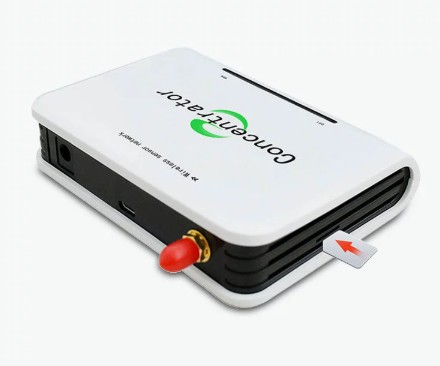
4G Cellular Backhaul — No Network Wiring Required

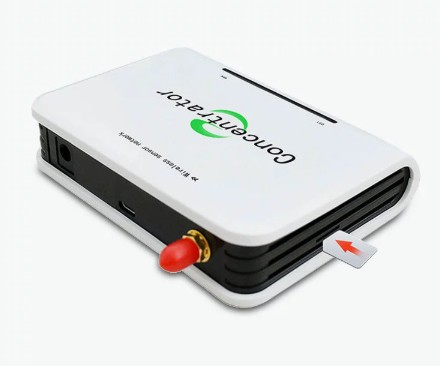
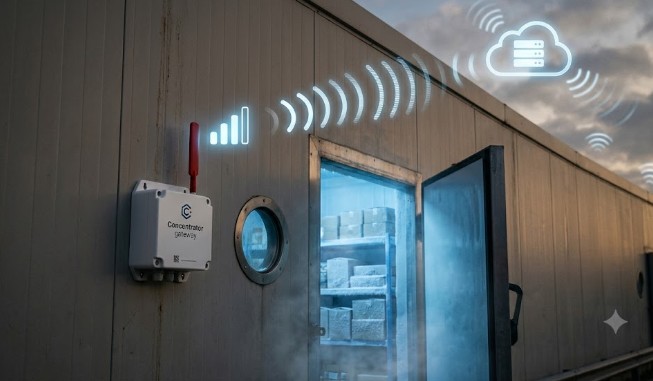
The gateway connects sensor data to the cloud over 4G LTE through a standard SIM card slot — no RJ45 port, no Ethernet cabling, no on-site broadband provisioning. It operates anywhere within cellular coverage, transmitting data to a remote server via TCP/IP over the carrier network. This untethers monitoring deployments from local IT infrastructure: drop the gateway at a remote cold-chain depot, an outdoor meteorological pole, or a roadside storage facility, insert a SIM card, and data flows without touching the site's network.
4G Cellular Backhaul — No Network Wiring Required

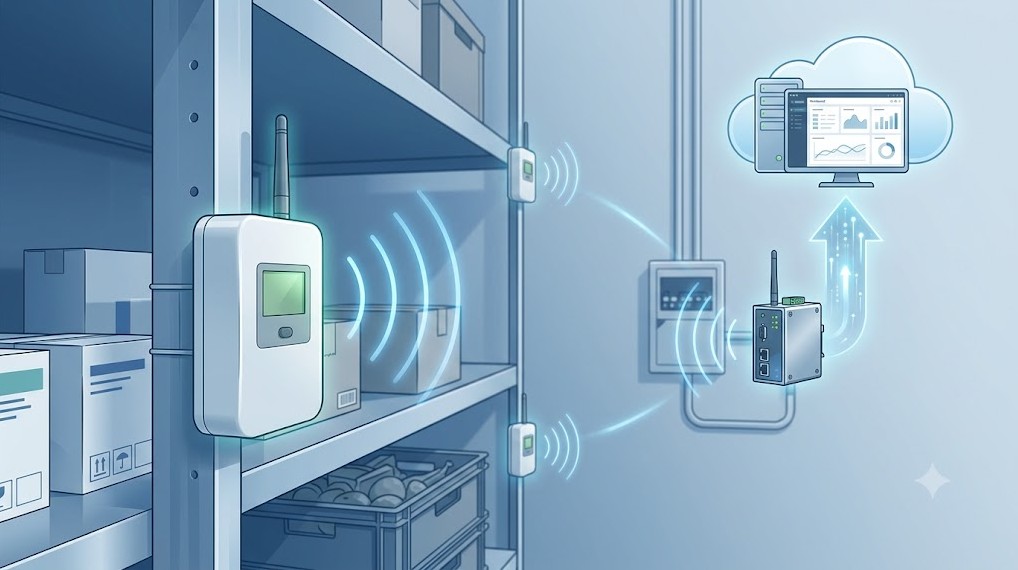
Long-Range Sub-GHz Collection with Auto-Routing

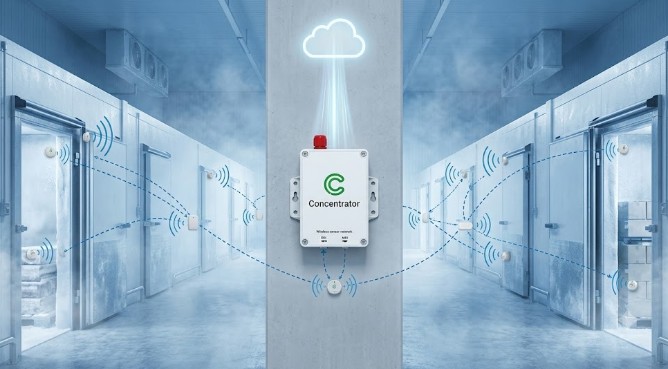
Operating at 470 MHz (frequency customizable) with -136 dBm receive sensitivity, the gateway reaches more than 5 km line-of-sight and automatically routes traffic through repeaters to extend coverage across obstructed or large deployments. Centralized collection of multi-mode sensors lets a single gateway aggregate an entire monitoring area, scaling from one room to a full industrial site as nodes are added — all backhauled through a single cellular link.

Long-Range Sub-GHz Collection with Auto-Routing

Network Controller, Not Just a Pipe

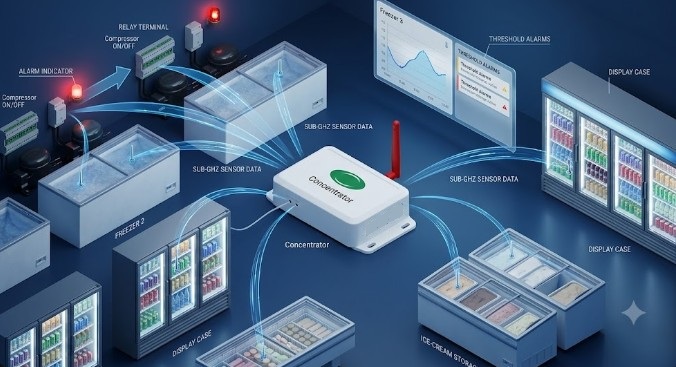
The gateway goes beyond forwarding data: it wirelessly sets sensor parameters such as sampling interval and auto-report behavior, synchronizes node clocks, and writes node geolocation — all via documented command frames. It also drives 4-channel relay terminals, issuing open/close and timed-control commands so actuators can be bound to sensor conditions for closed-loop, automated response without human intervention.

Network Controller, Not Just a Pipe

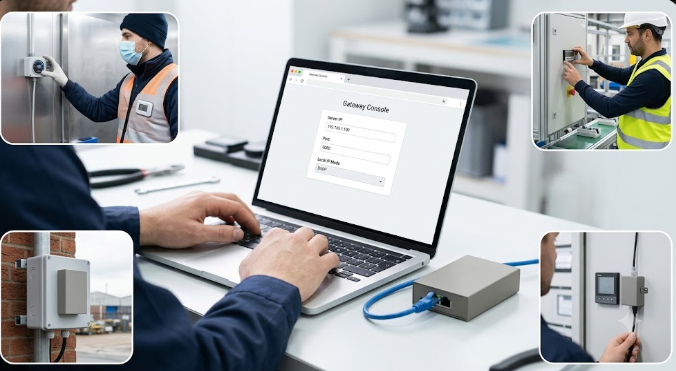
SIM and Go — Browser Setup Without Local Network

Commissioning is done from any browser that can reach the gateway over the cellular link: configure the remote server IP, port, or domain, set APN and cellular network parameters, and monitor the device remotely. A reset button restores factory defaults if connectivity settings are lost. Powered by an external 5V DC supply in a 110 × 80 × 26 mm housing and rated for -40 to 80°C, the gateway deploys into remote outdoor, off-grid, and road-accessible-only sites without any local networking prerequisite.

SIM and Go — Browser Setup Without Local Network

Technical Datasheet

Backhaul Interface
4G LTE cellular (SIM card slot); TCP/IP socket interface over cellular data
Network Connectivity
4G LTE cellular data; APN-configurable; works anywhere within cellular coverage; no Ethernet port, no local broadband required
RF Frequency
470 MHz (customizable)
Receive Sensitivity
-136 dBm
Transmission Range
>5 km line-of-sight
Networking
Auto-routing via repeaters; centralized collection of multi-mode sensors
Control Functions
Wireless sensor parameter setting (sampling interval, auto-report), clock/time synchronization, geolocation setting; 4-channel relay control (open/close and timed) via command frames
Protocol
Documented binary command frames with CRC-16 (0x1021) checksum; ASCII status reporting
Configuration
Browser web console accessible over cellular link — remote server IP/port/domain, APN settings, cellular parameters; reset button restores factory defaults
Power Input
DC 5V @ 1A (external supply)
Operating Temperature
-40°C to +80°C
Dimensions
110 × 80 × 26 mm
Applications
Remote meteorological & environmental monitoring, scattered cold-chain sites, off-grid energy & chemical facilities, roadside storage & transport, healthcare depots, production workshops, industrial sites without local IT infrastructure

Integrated Solutions

Request Technical Evaluation

Connect directly with our engineering desk. Submit your active project blueprint parameters below.

Bespoke IoT Solutions

Require Full-Stack Customization?