← Back

Edge AI

High-performance edge computing nodes, NVIDIA Jetson custom carrier boards, and intelligent vision camera modules with active learning SaaS ecosystems.

Edge AI Boxes

Edge AI computing platforms with NPU acceleration for multi-modal AI deployment.

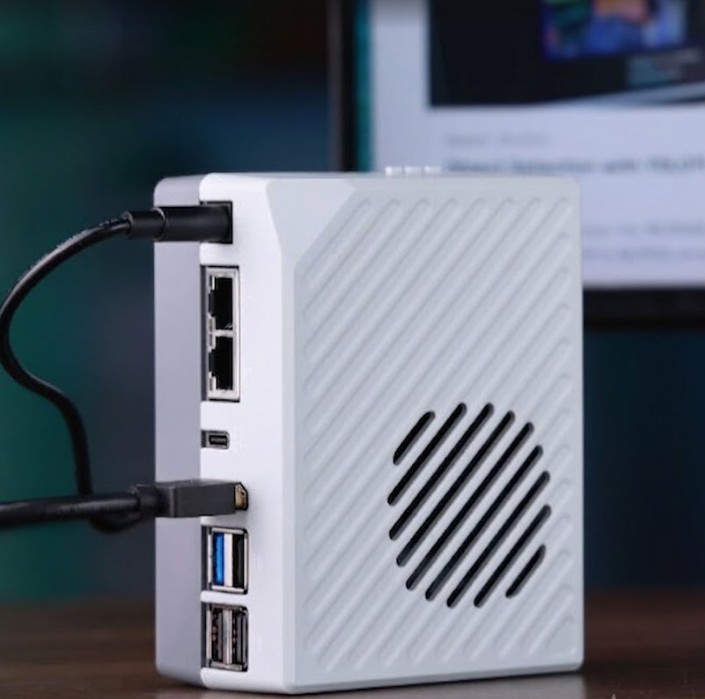
AI Box KM-ES3

Edge AI Computing Box powered by Rockchip RK3588 / RK3576 SoC with 6 TOPS NPU, Multi-Modal AI Deployment, and Flexible Industrial Expansion

The AI Box KM-ES3 is a family of compact, edge AI computing platforms powered by ARM Cortex-A multi-core processors with Mali GPUs, purpose-built for real-world AI application development and deployment. Each device integrates a 6 TOPS neural processing unit capable of INT4/8/16, FP16, BF16, and TF32 mixed-precision operations, enabling efficient on-device inference for computer vision, large language models, vision-language models, and speech AI workloads without cloud dependency. A rich set of industrial interfaces — including Gigabit and multi-Gigabit Ethernet with PoE support, M.2 expansion for SSD storage and AI accelerators, miniPCIe for 4G LTE and LoRaWAN connectivity, USB 3.0, and HDMI 2.0 multi-display output — makes the series adaptable to intelligent video analytics, smart retail, voice AI systems, AI-powered robotics, and privacy-sensitive edge processing deployments. With native support for Armbian, Debian, Ubuntu, and Android, plus a companion AI deployment platform offering over 100 pre-optimized models and one-command ONNX-to-NPU deployment workflows, the series compresses the journey from AI prototype to production deployment.

AI Box KM-ES3
View Specifications

Edge AI Cameras

Micro Linux edge computers with integrated 4K cameras and on-device AI inference.

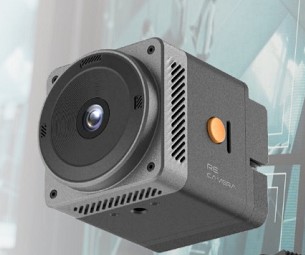
AI Camera KM-ES1

Micro Linux edge computer with integrated 4K camera — quad-core RV1126B, 3 TOPS NPU, fanless metal chassis, modular industrial I/O

Despite its name, the AI Camera KM-ES1 is fundamentally a micro Linux computer — a full-stack edge compute node with an integrated 4K camera sensor. At its core is the Rockchip RV1126B SoC running a 1.2GHz quad-core Cortex-A53 CPU with LPDDR4 RAM (2GB / 4GB) and 16GB onboard eMMC storage, booting an Linux OS with SSH access and standard HTTP APIs for programmatic control. Think of it as a rugged, industrial-grade Linux single-board computer that happens to ship with a built-in SC850SL 4K@30FPS image sensor, 6-axis IMU, dual microphones, and a 1W speaker — plus a 3 TOPS NPU for on-device INT8/INT16 AI inference (YOLOv8 at 20 FPS in real time). Connectivity covers Gigabit Ethernet with PoE, Wi-Fi 5.2, Bluetooth 5.2, and full-feature USB Type-C OTG. For industrial integration, the board exposes dual CAN bus, dual GPIO, dual 12–24V DIO, a 22-pin MIPI DSI display interface, and a debug UART, with modular expansion paths to GPS, Wi-Fi HaLow, and RS485. A browser-based Web UI handles video preview, dual-stream H.264 encoding, OSD overlay, RTSP streaming, and recording management (with seven trigger modes and schedule windows) without requiring any client software. Recording triggers include AI inference, timer, GPIO, UART, HTTPS webhook, loop, and sound event detection. AI models — deployed as RKNN blobs or converted from ONNX via SenseCraft — output inference results over HTTP, MQTT, or UART. Power comes from 12–24V DC (5525 barrel) or PoE, with onboard lithium battery charge/discharge management. Housed in a fanless metal chassis, the KM-ES1 runs silently in dusty, high-vibration environments, offering developers a familiar Linux toolchain on a self-contained industrial edge platform.
AI Camera KM-ES1
View Specifications
Custom Hardware-Software Matching

Can't find the exact specification for your deployment?

We map, test, and bundle custom hardware layers tailored specifically to your proprietary software architecture or unique operational constraints.