Edge AI Cameras 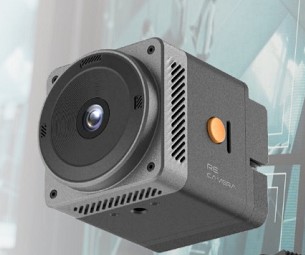
AI Camera KM-ES1
Micro Linux edge computer with integrated 4K camera — quad-core RV1126B, 3 TOPS NPU, fanless metal chassis, modular industrial I/O
Micro Linux edge computer with integrated 4K camera — quad-core RV1126B, 3 TOPS NPU, fanless metal chassis, modular industrial I/O
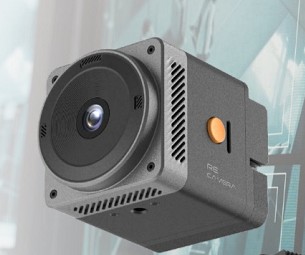
Strip away the camera module and what remains is a fully capable micro Linux computer: quad-core Cortex-A53 CPU, LPDDR4 RAM, 16GB eMMC storage, Wi-Fi, Bluetooth, and Gigabit Ethernet. The device runs a Linux OS — accessible via SSH — and exposes standard HTTP APIs for every function. Developers deploy custom applications, schedule cron jobs, run background services, and integrate with any platform over REST, MQTT, or UART. The camera sensor is just one peripheral among many on this compute platform, which also supports a 22-pin MIPI DSI external display, USB OTG peripherals, and expansion via CAN, GPIO, RS485, GPS, and Wi-Fi HaLow.

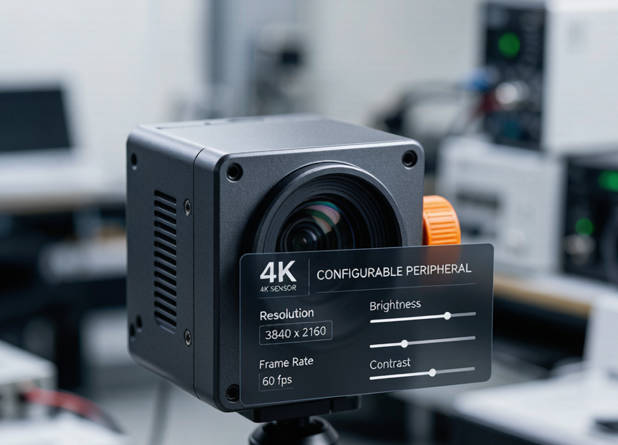
The SC850SL sensor captures 4K video at 30 FPS with H.264 encoding. Through the Web UI, users configure resolution, frame rate, GOP, bitrate control mode (VBR), and maximum bitrate independently for main and sub streams. Image adjustments include brightness, contrast, saturation, sharpness, hue, exposure mode, gain mode, flip, rotation, and day/night auto-switching with configurable sensitivity and hysteresis. OSD overlay supports channel name, date/time, and device serial number at user-defined positions.
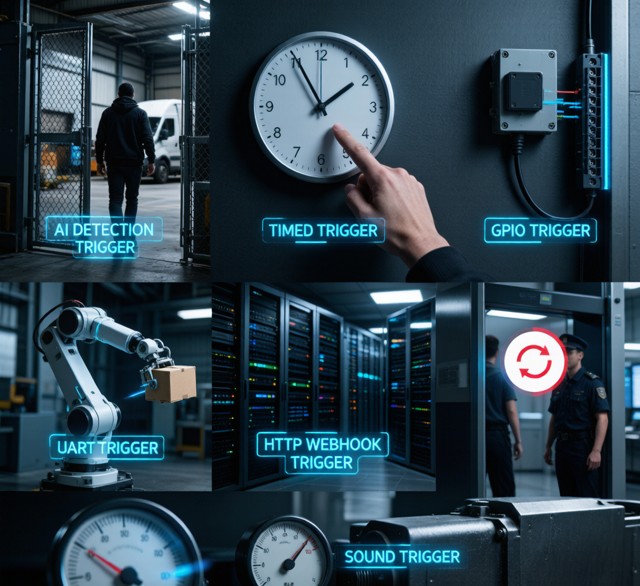
Recording can be initiated by seven trigger types: AI inference (object detection with configurable class filter, confidence range, and detection zone), timed interval, GPIO level, UART command, HTTPS webhook, continuous loop, and sound event detection. Each trigger mode is independently configured and activated. A schedule manager defines recording windows by day of week and hour, with quick-presets for weekday daytime, nighttime, or 24/7 operation. Recorded files are saved in MP4, JPG, or RAW format to local storage with configurable quota and overwrite policy.
No client software installation is required. Operators access the device through a standard browser at its IP address to view live video, capture snapshots, start/stop recording, switch between main and sub streams, and adjust all encoding and display parameters. The Web UI also provides device information, system resource monitoring, network configuration (Wi-Fi station mode), SSH toggle, firmware OTA updates, configuration export/import, and real-time system log viewing with filtering and download.

The KM-ES1 provides dual CAN bus interfaces, dual GPIO, dual 12–24V digital I/O, a 22-pin MIPI DSI connector for external display attachment, a full-feature USB Type-C port with OTG, and a debug UART. Modular expansion supports GPS, Wi-Fi HaLow, and RS485 connectivity for adaptation to diverse industrial environments. A 6-axis IMU (ICM-42670-P) delivers 3-axis accelerometer (±2/±4/±8/±16 g) and 3-axis gyroscope (±250/±500/±1000/±2000 dps) data for motion and orientation sensing. Dual electret microphones and a 1W speaker driven by an NS4150B class-D amplifier provide audio capture and playback.
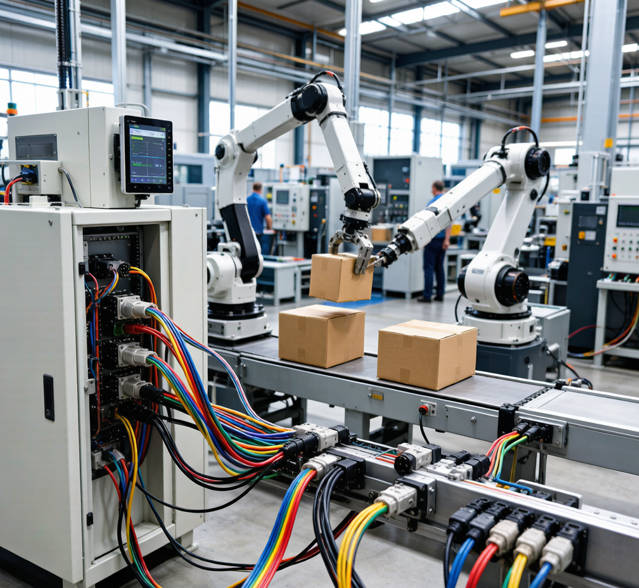
The KM-ES1 is housed in a fanless metal chassis designed for silent, dust-resistant operation in industrial environments. The modular architecture supports flexible hardware expansion — adding GPS for location-aware applications, Wi-Fi HaLow for long-range low-power connectivity, CAN bus for vehicle and machine integration, and RS485 for industrial sensor and actuator networks. This expandability allows a single hardware platform to adapt across factory floors, smart agriculture, transportation, and infrastructure monitoring without redesign.
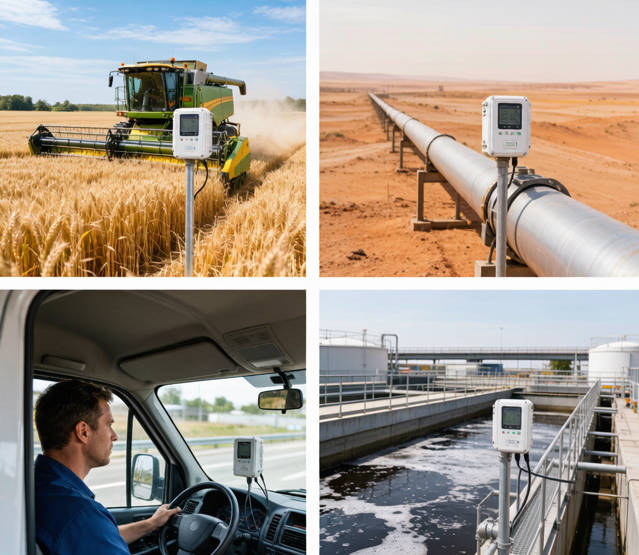
The built-in 3 TOPS NPU handles INT8/INT16 mixed-precision computation, delivering real-time YOLOv8 object detection at 20 FPS while the CPU simultaneously encodes 4K@30FPS H.264 video — no cloud required. All AI processing stays on-device, preserving data privacy, eliminating network latency, and guaranteeing reliable operation in air-gapped or offline deployments. Through the browser-based AI management page, users upload RKNN models, convert ONNX to RKNN via SenseCraft, configure detection classes and confidence / IOU thresholds, adjust inference frequency, and view real-time overlays on the live stream. Inference outputs stream to external systems over HTTP, MQTT, or UART for downstream automation.

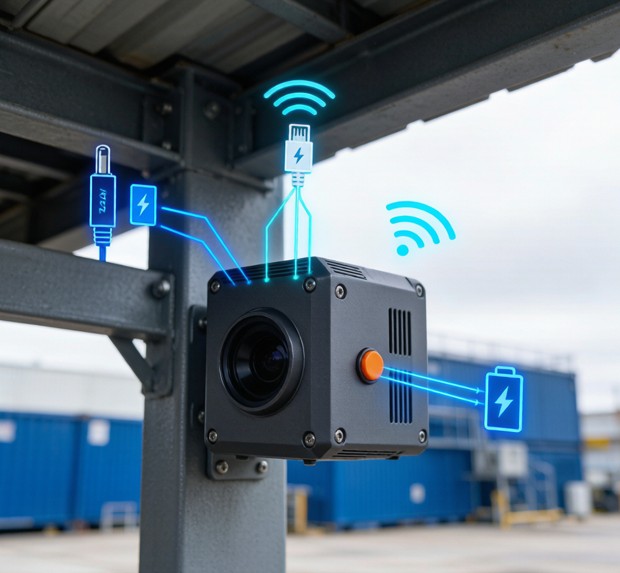
Power input options include 12–24V DC via 5525 barrel jack and PoE (802.3af/at) over the Gigabit Ethernet port. An onboard 7.4V lithium battery charge/discharge management circuit supports battery-powered deployment. Wireless connectivity is provided by Wi-Fi 5.2 and Bluetooth 5.2. Storage consists of 16GB onboard eMMC and an SD card slot supporting up to 512GB. Memory is LPDDR4, available in 2GB or 4GB configuration.
Connect directly with our engineering desk. Submit your active project blueprint parameters below.
For technical consultations, sample validation, or deployment synchronizations, connect directly with us via:
WhatsApp Online Microsoft Teams